
Neuroaesthetic Design 2026 is becoming an interesting approach to modern design because it connects aesthetics with the way people perceive and experience spaces. Instead of focusing only on how a room, building, or interior looks, this approach also considers attention, comfort, emotion, memory, movement, and overall experience. Current research is exploring how architectural forms, lighting, spatial composition, and other environmental features can influence cognitive and emotional responses Neuroaesthetic Design 2026.
As design becomes more human-centered, designers are looking beyond decoration. Curves, natural elements, balanced compositions, light, materials, and spatial proportions can all contribute to the experience of an environment. At the same time, the field is still developing, so designers should avoid treating individual research findings as universal rules.
Table of Contents
- What Is Neuroaesthetic Design 2026?
- Why It Matters
- 7 Powerful Benefits
- 5 Hidden Risks
- How It Can Be Applied
- Future Trends
- FAQs
- Conclusion
What Is Neuroaesthetic Design 2026?
Neuroaesthetic Design 2026 combines ideas from aesthetics, neuroscience, psychology, architecture, and environmental design. Its purpose is to better understand how people perceive and respond to designed environments Neuroaesthetic Design 2026.
Traditional design often asks whether something looks attractive. A neuroscience-informed approach asks another question: How does this visual or spatial experience affect the person using it?
Research in neuroarchitecture has examined elements such as lighting, color, spatial layout, architectural form, and environmental conditions in relation to attention, emotion, comfort, cognition, and wellbeing.
Brain Response and Visual Experience
The brain does not experience a room as a collection of completely separate objects. Different features work together to create an overall experience.
Shape, proportion, texture, movement, lighting, and spatial organization can influence what people notice and how they interpret an environment. Researchers are also using tools such as eye-tracking, EEG, physiological sensors, and virtual reality to study these responses Neuroaesthetic Design 2026.
Why Neuroaesthetic Design 2026 Matters
Modern design is increasingly focused on human experience. A beautiful space can be visually attractive, but successful design can also help people feel comfortable, oriented, engaged, and connected to their surroundings.
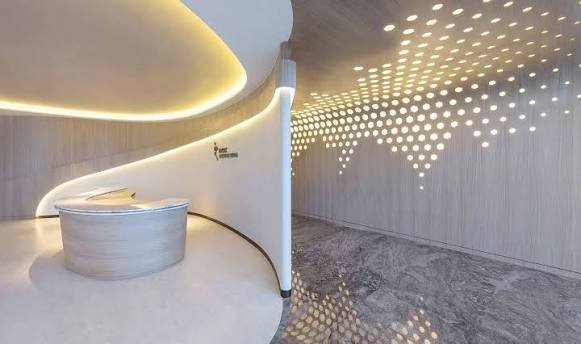
This approach can be relevant to interior design, architecture, workplaces, educational environments, healthcare spaces, retail areas, and public buildings.
However, scientific evidence is still developing. A recent 2026 systematic mapping review found that neuroarchitecture research is expanding rapidly, but the field remains methodologically diverse. The review also found that only a small portion of the research had reached the stage of operational adaptive design.
7 Powerful Benefits of Neuroaesthetic Design 2026
1. Better Visual Comfort
One important benefit is greater attention to visual comfort Neuroaesthetic Design 2026.
Balanced proportions, suitable lighting, organized layouts, and controlled visual complexity can make a space easier to experience. A room with too many competing elements may feel overwhelming, while an extremely empty space may feel cold or disconnected.
The goal is to create an appropriate visual balance rather than simply adding more decoration.
2. Stronger Attention
Attention is important in offices, classrooms, studios, and public environments.
Clear visual hierarchy can help users understand where to look and what areas are important. Designers can use contrast, positioning, lighting, scale, and architectural form to create this hierarchy.
Research into neuroarchitecture frequently examines attention and other cognitive responses to environmental conditions Neuroaesthetic Design 2026.
3. Greater Emotional Connection
Design can influence more than visual perception. It can also contribute to emotional experiences.
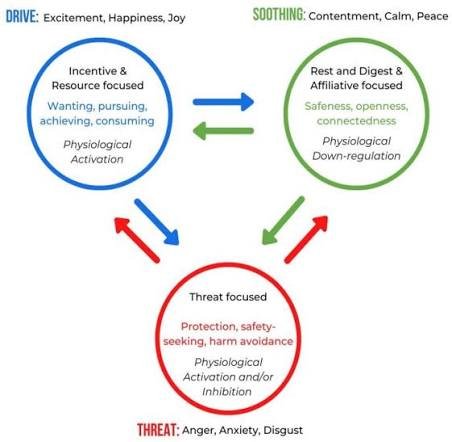
Natural materials, familiar forms, comfortable proportions, meaningful objects, and suitable colors may help create a particular atmosphere. This can be useful in homes, hospitality spaces, cultural buildings, and relaxation-focused environments.
The important point is that emotional responses are personal. The same design will not necessarily create the same feeling for everyone.
4. Support for Wellbeing
Wellbeing is becoming an important goal in modern design Neuroaesthetic Design 2026.
Research on indoor environments has investigated relationships between factors such as lighting, noise, thermal conditions, air quality, physiological responses, and psychological states.
Natural light, appropriate acoustics, comfortable layouts, and nature-inspired features may therefore become useful parts of a wellbeing-focused environment.
Still, designers should not claim that one visual feature automatically produces a specific health result.
5. More Memorable Spaces
A distinctive environment can be easier to recognize and remember.
This idea is connected to imageability, which relates to how recognizable and memorable a place is. A recent systematic review examined 56 peer-reviewed studies related to architectural imageability, cognition, emotion, memorability, wayfinding, and related topics.
Memorable design can be particularly useful for public spaces, retail environments, cultural buildings, and branded interiors.
6. Better Spatial Experience
People do not experience architecture from one fixed viewpoint.
They walk through entrances, corridors, rooms, stairs, and open areas. They stop, turn, look around, and interact with their surroundings.
This is why current research is moving beyond simple photographs and toward 3D prototypes and immersive environments. A 2026 research framework proposes testing architectural experiences through image-based evaluation, object-based interaction, and full-scale immersive experience.
This approach can make design research closer to the way people actually experience spaces.
7. More Evidence-Based Decisions
Another major benefit is the possibility of combining creativity with evidence.
Instead of depending entirely on personal taste, designers can use observation, questionnaires, eye-tracking, physiological measurements, and immersive testing to study how people respond to different environments.
The latest research shows that these technologies are increasingly being used in neuroscience-informed architectural studies.
This does not remove creativity from design. Instead, it can provide additional information for making design decisions.
Neuroaesthetic Design 2026: Benefit Comparison
| Benefit | Design Element | Possible User Response |
|---|---|---|
| Visual comfort | Balanced composition | Easier visual experience |
| Better attention | Clear hierarchy | Improved focus |
| Emotional connection | Colors and materials | Stronger atmosphere |
| Wellbeing | Light and natural elements | Greater comfort |
| Memorability | Distinctive forms | Better recognition |
| Spatial experience | Curves and movement | More engaging interaction |
| Evidence-based decisions | User testing | Better-informed choices |
Illustrative Benefit Graph
The following chart is illustrative only. It does not represent measured scientific results. It simply compares the seven benefit areas conceptually.
Neuroaesthetic Design: Illustrative Benefit Areas
Conceptual comparison of seven potential benefit areas. Values are illustrative and are not research measurements.0255075100Visual comfortAttentionEmotional connectionWellbeingMemorabilitySpatial experienceEvidence-based de…

5 Hidden Risks of Neuroaesthetic Design 2026
1. Individual Responses Can Differ
One major risk is assuming that every person will respond to a design in the same way.
People have different backgrounds, memories, preferences, experiences, and environmental needs. Therefore, a design that feels calming to one person may feel uninteresting or uncomfortable to another.
This is why user testing and context are important.
2. Neuroscience Can Be Oversimplified
Neuroscience is complex. A particular brain or physiological response does not automatically mean that a design is good or bad.
Current research has highlighted methodological differences within neuroarchitectural studies and the difficulty of translating controlled experiments into real architectural environments.
Designers should therefore avoid exaggerated claims based on limited evidence.
3. Advanced Testing Can Increase Costs
Sophisticated research can require specialized equipment, researchers, software, and additional time.
Eye-tracking, EEG, physiological sensors, virtual reality, and immersive testing can make a design research project more expensive than a conventional process.
These tools can be valuable, but they are not necessary for every design project.
4. Too Much Optimization Can Reduce Authenticity
Trying to optimize every visual element can make a space feel artificial.
A successful environment still needs personality, flexibility, cultural meaning, and practical function. Design should support people rather than attempt to control every aspect of their experience.
5. Evidence Is Still Developing
The field is growing quickly, but there is no universal formula for creating a “perfect” environment.
A 2026 systematic mapping review examined 121 studies and found that research is progressing toward evidence integration, while translation into adaptive and operational design remains limited.
Therefore, designers should treat this approach as an evolving evidence-informed field rather than a guaranteed solution.
How Neuroaesthetic Design 2026 Can Be Applied
This approach does not have to make a design project unnecessarily complicated.
Designers can begin by studying how people move through a space. They can then examine lighting, visual hierarchy, proportions, materials, colors, acoustics, natural features, and areas of visual focus.
For smaller projects, user feedback and observation may be enough to identify useful improvements. Larger research projects can use immersive simulations, eye-tracking, physiological measurements, or other advanced tools.
Interior Design Applications
In interior spaces, designers can focus on balanced layouts, comfortable lighting, appropriate colors, natural materials, and controlled visual complexity.
The goal is not to make every room look identical. Instead, the environment should feel coherent and suitable for its purpose.
For example, a workspace may need a different visual atmosphere from a bedroom or relaxation area.
Architecture Applications
Architecture provides an even broader opportunity because people experience buildings through movement.
Entrances, corridors, windows, stairs, natural light, views, curves, and spatial transitions can all influence how people understand and experience a building.
Recent research argues for studying architecture across multiple scales rather than relying only on static images.
Future of Neuroaesthetic Design 2026
The future of this field is likely to become more data-informed and interactive.
Artificial intelligence, virtual reality, spatial computing, biometric sensing, and digital simulations could help designers explore different environments before construction.
Current research already shows growing use of immersive technologies and physiological measurements in studies of spatial cognition and environmental experience.
Another important development is the move toward real-world testing. A person looking at a picture of a room does not experience it in exactly the same way as someone physically walking through that room.
Future design research may therefore combine creative practice, neuroscience, environmental psychology, user feedback, and immersive testing.
This could make design more responsive to actual human experience while still leaving room for creativity.
FAQs About Neuroaesthetic Design 2026
What Is Neuroaesthetic Design 2026?
Neuroaesthetic Design 2026 is an emerging approach that connects aesthetic design with research into human perception, emotion, attention, cognition, and spatial experience.
Is It the Same as Neuroarchitecture?
They are closely connected but not exactly the same. Neuroarchitecture broadly examines relationships between neuroscience and built environments, while neuroaesthetics focuses more specifically on aesthetic perception and response.
Which Design Elements Are Important?
Commonly discussed elements include light, color, shape, symmetry, spatial proportions, materials, visual complexity, natural features, acoustics, and movement through space.
Can It Improve Wellbeing?
It may support comfortable and positive environmental experiences, but it does not guarantee a specific health outcome. Research on built environments and wellbeing is still developing.
Why Is This Design Approach Becoming Important?
Designers increasingly want to understand not only how spaces look but also how people experience them. New measurement technologies are making it easier to study these relationships.
Conclusion
Neuroaesthetic Design 2026 brings together design, neuroscience, psychology, and human-centered thinking. Its potential benefits include better visual comfort, attention, emotional connection, wellbeing, memorability, spatial experience, and evidence-based decision-making.
However, the risks should also be considered. People respond differently to environments, neuroscience can be oversimplified, advanced testing can increase costs, excessive optimization can reduce authenticity, and the scientific evidence is still developing.
The strongest future direction is therefore not to replace creativity with neuroscience. Instead, designers can combine creative thinking with evidence, user feedback, and realistic environmental testing.
As research continues to develop, this approach could become an increasingly useful way to understand one simple but important question: How does a designed environment make people feel, think, and experience space?
Pingback: Immersive Design 2026: 7 Powerful Benefits & 5 Hidden Risks