
Table of Contents
- Introduction to Daylight Designs
- Why Daylight Designs Matter in Windowless Spaces
- Daylight Designs Using Light Tubes
- Daylight Designs Using Solar Pipes
- Daylight Designs Using Light Wells
- Daylight Designs Using Reflective Surfaces
- Daylight Designs Using Skylights and Roof Openings
- Daylight Designs Using Hybrid Systems
- Benefits of Daylight Designs
- Challenges of Daylight Designs
- Future of Daylight Designs
- Conclusion
Introduction to Daylight Designs
Daylight Designs are changing the way architects think about natural light. Traditionally, buildings depend on windows to bring sunlight indoors, but many modern spaces have deep rooms, underground areas, narrow plots, privacy restrictions or limited exterior walls where ordinary windows cannot provide enough brightness. New daylighting approaches are now designed to capture sunlight from roofs, courtyards and external surfaces and guide it into places that may otherwise remain dark 7 Powerful Designs That Bring Natural Light Into Windowless Spaces.
The interesting part is that these systems do not always require a large traditional window. Reflective tubes, solar pipes, light wells, skylights and specially designed surfaces can transport or redirect daylight deeper into a building. Research published in 2026 is particularly focused on improving daylight distribution while also controlling glare, heat gain and energy use 7 Powerful Designs That Bring Natural Light Into Windowless Spaces.
Why Daylight Designs Matter in Windowless Spaces
A room without direct access to daylight can quickly become dependent on artificial lighting. This can increase electricity consumption and may make the space feel visually disconnected from the outdoor environment. The purpose of modern Daylight Designs is not simply to make a room brighter. The bigger goal is to create a more balanced indoor environment where daylight can reach useful areas without creating excessive glare or unwanted solar heat 7 Powerful Designs That Bring Natural Light Into Windowless Spaces.
This becomes especially important in schools, offices, hospitals, underground spaces, shopping areas and large residential buildings. In deep-plan buildings, the outside wall may be too far away for ordinary windows to illuminate the entire interior. Daylight has to be transported, reflected or redistributed.
Recent research shows that light pipes can be particularly useful in spaces where conventional windows cannot provide sufficient daylight. A 2026 experimental study found that a light-pipe retrofit substantially increased indoor illumination and reduced artificial-lighting energy use in its test environment.
Daylight Designs Using Light Tubes
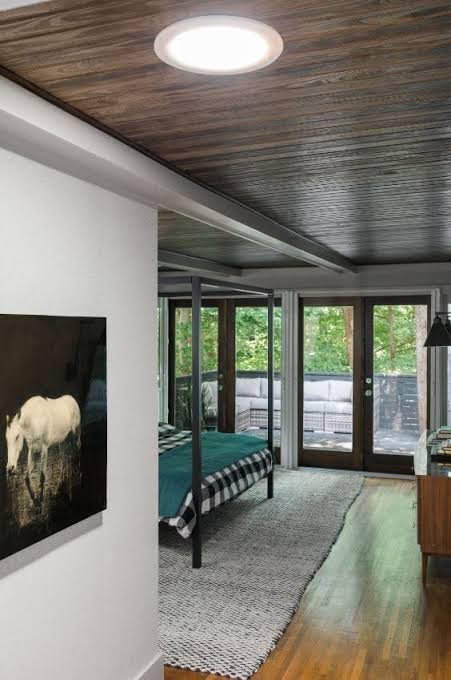
One of the most interesting Daylight Designs uses tubular daylight devices, often called light tubes or sun tunnels. The basic idea is simple. A collector is placed where it can receive daylight, usually on a roof. The captured light then travels through a highly reflective tube before being released into the interior through a diffuser 7 Powerful Designs That Bring Natural Light Into Windowless Spaces.
The tube works almost like an optical pathway inside the building. Instead of installing a traditional window on an external wall, designers create a controlled route for daylight to travel from outside to inside.
This approach can be useful for corridors, bathrooms, interior offices, staircases and rooms positioned far from external walls. Because the tube can travel through a roof or ceiling, it can reach locations that would otherwise receive very little natural light 7 Powerful Designs That Bring Natural Light Into Windowless Spaces.
How Daylight Designs Move Light Through Tubes
The collector captures available sunlight and diffuse sky light. The highly reflective internal surface then redirects much of that light along the tube. Finally, the diffuser spreads the incoming light into the room.
The design has to balance several factors. A longer tube can lose more light, while the diameter, reflective material, collector shape and diffuser design can all influence performance. The 2026 research direction is increasingly concerned with making these systems more efficient while maintaining comfortable and uniform illumination.
Daylight Designs Using Solar Pipes
Solar pipes are another important category of Daylight Designs. They are closely related to light tubes but can be incorporated into buildings in different configurations. Their major advantage is that they can deliver natural light to interior spaces without requiring a conventional side window 7 Powerful Designs That Bring Natural Light Into Windowless Spaces.
A solar pipe can collect daylight from a roof and transfer it through a reflective pathway. This makes it particularly attractive for buildings where privacy, structure or urban density prevents the installation of large windows.
The technology becomes especially interesting in hot climates. Instead of simply creating a huge opening for sunlight, a carefully designed solar pipe can deliver useful illumination while giving designers more control over how sunlight enters the building.
Daylight Designs for Deep Interior Rooms
Deep rooms are among the biggest challenges for natural lighting. A normal window may brighten the area close to the wall while leaving the back of the room comparatively dark.
A 2026 study examining hybrid daylighting in deep spaces combined tubular daylighting devices with horizontal light shelves. The research reported that the hybrid approach improved daylight uniformity compared with its reference model, showing why combining different daylight strategies can be more effective than relying on a single device 7 Powerful Designs That Bring Natural Light Into Windowless Spaces.
This approach could become useful in classrooms, offices and other large rooms where daylight needs to travel much farther than a traditional window can manage.
Daylight Designs Using Light Wells
Another creative approach among Daylight Designs is the light well. A light well creates a vertical or semi-vertical opening that allows daylight to move deeper into a building.
Light wells can be particularly valuable in multi-story buildings. Instead of depending entirely on external façades, designers can create an internal space that acts as a pathway for daylight 7 Powerful Designs That Bring Natural Light Into Windowless Spaces.
Modern research is also exploring ways to improve existing light wells. A 2026 study on residential light wells examined strategies such as increasing wall reflectance, adding multi-level tubular daylighting devices and modifying the geometry of the light well.
Reflective Daylight Designs Inside Light Wells
The internal surfaces of a light well can make a major difference. Dark surfaces absorb more light, while lighter and more reflective surfaces can redirect a larger portion of available daylight.
This means that the design of a light well is not only about creating an opening. Its width, depth, shape, surface material and surrounding architecture can all influence how much daylight reaches the rooms below.
This creates an interesting design opportunity because an ordinary-looking shaft can potentially become an active daylighting system 7 Powerful Designs That Bring Natural Light Into Windowless Spaces.
Daylight Designs Using Reflective Surfaces
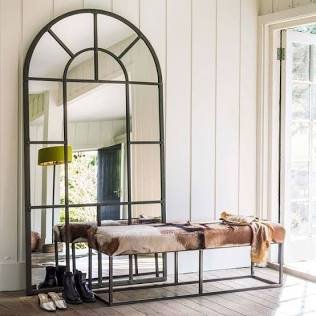
Some of the simplest Daylight Designs depend on reflection rather than complicated technology. Light shelves, reflective ceilings, polished surfaces and carefully positioned walls can redirect daylight toward darker parts of a room 7 Powerful Designs That Bring Natural Light Into Windowless Spaces.
A light shelf is particularly useful because it can intercept incoming daylight and reflect it toward the ceiling. The ceiling can then distribute the light deeper into the interior.
This technique becomes even more interesting when combined with tubular daylight devices. The light shelf can help distribute daylight from an opening, while the tube can bring daylight to areas that are beyond the reach of that opening.
The result is a layered lighting strategy rather than a single source of illumination.
Daylight Designs Using Skylights and Roof Openings
Skylights represent another major category of Daylight Designs. Instead of bringing light through a vertical wall, they introduce daylight from above 7 Powerful Designs That Bring Natural Light Into Windowless Spaces.
Roof openings can provide strong daylight to interior areas, especially in buildings with large floor plates. However, skylights also create challenges. Too much direct sunlight can produce glare and unwanted heat gain.
That is why modern daylight research is moving toward more carefully optimized skylight designs. Designers are increasingly studying size, geometry, orientation, shading and glazing properties instead of treating every skylight as a simple hole in the roof.
Smart Daylight Designs for Skylights
One 2026 study investigated thermotropic glazing in skylights. The research reported improvements in daylighting and thermal performance across several climate conditions, showing the potential of glazing that can respond to environmental conditions 7 Powerful Designs That Bring Natural Light Into Windowless Spaces.
This is an important development because the future of daylighting is not necessarily about allowing the maximum amount of sunlight inside. It is about allowing the right amount of useful light while controlling heat and glare.
Daylight Designs Using Hybrid Systems
The most promising Daylight Designs may combine several technologies instead of depending on one method.
Imagine a building where a roof collector captures sunlight, a reflective tube carries it downward, a light shelf redirects additional daylight and a carefully designed ceiling spreads the illumination across the room.
This type of hybrid system can address different lighting problems simultaneously 7 Powerful Designs That Bring Natural Light Into Windowless Spaces.
A 2026 study of deep spaces found that combining tubular daylighting devices with horizontal light shelves improved daylight uniformity substantially compared with the reference model. This suggests that the future may belong to systems that work together rather than isolated daylighting components.
Why Hybrid Daylight Designs Can Be More Effective
Different daylight systems have different strengths. A skylight can provide strong overhead illumination, but it may create glare. A light tube can reach a distant interior zone, but its performance depends on available daylight and tube geometry. A light shelf can redirect sunlight, but it needs an appropriate opening.
When these systems are carefully coordinated, one technique can compensate for the limitations of another 7 Powerful Designs That Bring Natural Light Into Windowless Spaces.
Benefits of Daylight Designs
The biggest benefit of Daylight Designs is the ability to bring useful natural illumination into spaces that would otherwise depend heavily on electric lighting 7 Powerful Designs That Bring Natural Light Into Windowless Spaces.
A 2026 experimental study reported that a light-pipe retrofit increased indoor illumination by more than 520 lux compared with a usual 170-lux condition in its test setup, while artificial-lighting energy consumption was reduced by approximately 62.5%.
Natural daylight can also improve visual quality when it is distributed evenly. A bright spot directly beneath a skylight is not necessarily better than a moderately illuminated room. Good daylight design tries to reduce strong contrasts and uncomfortable glare 7 Powerful Designs That Bring Natural Light Into Windowless Spaces.
Another benefit is architectural flexibility. Designers no longer have to assume that every useful room needs a large external window. Light can potentially be transported through ceilings, roofs and internal shafts 7 Powerful Designs That Bring Natural Light Into Windowless Spaces.
Challenges of Daylight Designs
Despite their advantages, Daylight Designs are not a perfect replacement for windows in every situation.
Sunlight changes throughout the day and across seasons. Cloud cover can also reduce the amount of available daylight. A system that works extremely well under bright sunshine may behave differently during cloudy weather 7 Powerful Designs That Bring Natural Light Into Windowless Spaces.
Glare is another important concern. More daylight does not automatically mean better daylight. Direct sunlight can create uncomfortable brightness and heat gain if it is not controlled.
Maintenance can also matter. Roof collectors, skylights and reflective tubes must remain clean and properly maintained. Dust, aging materials and damaged components can reduce performance.
For this reason, successful daylighting requires careful simulation, climate analysis and architectural planning rather than simply adding more openings 7 Powerful Designs That Bring Natural Light Into Windowless Spaces.
Future of Daylight Designs
The future of Daylight Designs is likely to move toward smarter, more adaptive systems. Instead of treating daylight as a fixed resource, designers are increasingly exploring systems that respond to changing environmental conditions 7 Powerful Designs That Bring Natural Light Into Windowless Spaces.
Artificial intelligence and building simulation can help architects predict how sunlight will move through a building during different hours and seasons. Advanced glazing may change its optical properties, while hybrid systems can combine daylight collection, reflection and ventilation.
Research is also moving toward underground and privacy-constrained spaces. A 2026 study of underground public spaces introduced a spatial daylight metric designed to evaluate daylight performance more comprehensively across space and time.
This direction is important because future buildings may need to provide natural light in places that traditionally had no realistic access to it.
Conclusion: The Future of Daylight Designs
Daylight Designs are proving that natural light does not have to enter a building only through a traditional window. Light tubes, solar pipes, light wells, reflective surfaces, skylights and hybrid systems can create alternative pathways for daylight 7 Powerful Designs That Bring Natural Light Into Windowless Spaces.
The most exciting development is not one individual technology. It is the combination of different design strategies to create brighter, more comfortable and more energy-efficient spaces 7 Powerful Designs That Bring Natural Light Into Windowless Spaces.
As 2026 research continues to explore adaptive materials, hybrid daylighting and advanced optical systems, windowless or deep interior spaces may become less dependent on artificial lighting. The future of architecture could therefore be about designing buildings that do not simply have windows, but buildings that intelligently move daylight wherever it is needed.