
School Design Ideas are becoming an important part of modern education as schools look for better ways to support learning, creativity, comfort, and student wellbeing. A school is not simply a building filled with classrooms and desks. The way classrooms, corridors, outdoor areas, lighting, furniture, technology spaces, and quiet zones are designed can influence how students experience their learning environment. In 2026, new research and design thinking are encouraging architects and educators to create school spaces that are more flexible, nature-connected, comfortable, and adaptable to changing educational needs.
Modern are especially interesting because they do not always require expensive futuristic buildings. Simple changes such as bringing more natural light into classrooms, reducing unwanted noise, creating flexible furniture arrangements, adding plants, or developing outdoor learning areas can completely change how a school feels. These ideas can help schools move away from rigid classroom layouts and create environments that support different learning styles. This article explores nine fascinating that are shaping the future of educational spaces.
Table of Contents
- Why School Design Ideas Matter
- Flexible Classroom School Design Ideas
- Natural Light School Design Ideas
- Quiet Zone School Design Ideas
- Nature-Based School Design Ideas
- Outdoor School Design Ideas
- Movement-Friendly School Design Ideas
- Technology-Based School Design Ideas
- Comfort-Focused School Design Ideas
- Future-Ready School Design Ideas
- School Design Ideas Comparison Table
- Conclusion
Why School Design Ideas Matter
Traditional schools were often designed around a simple classroom model where students sat in rows facing a teacher. Modern education is much more diverse. Students may study independently, work in groups, use digital tools, participate in creative activities, or move between different learning environments throughout the day.
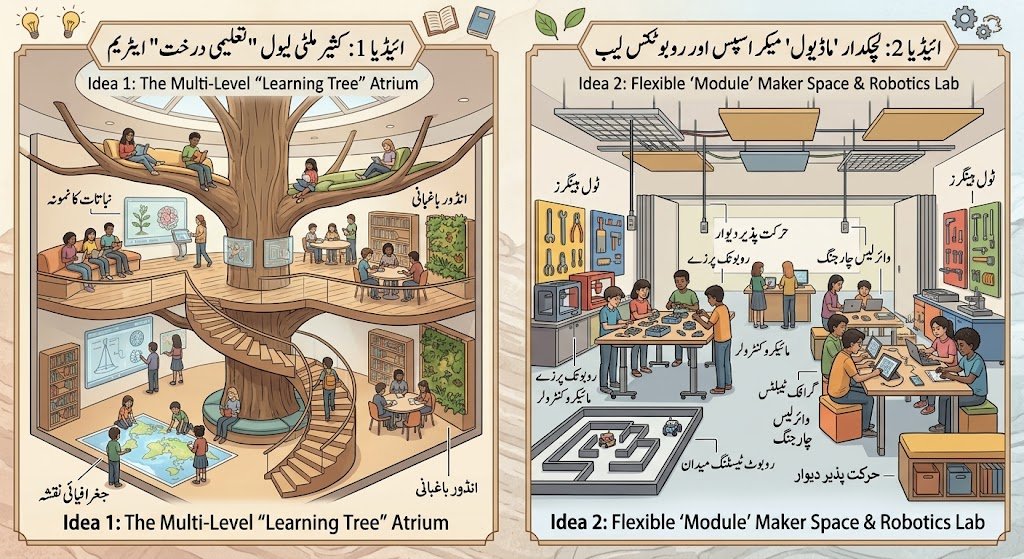
This is why are becoming increasingly focused on flexibility. Instead of creating one space for only one purpose, modern schools can provide environments that adapt to different activities. A classroom can become a discussion area, a group-work space, or a quiet study room without requiring major structural changes.
The design of a school can also influence how students move, interact, concentrate, and connect with their surroundings. When architecture supports these everyday activities, the building itself becomes part of the educational experience.
Flexible Classroom School Design Ideas
One of the most useful is the flexible classroom. Flexible classrooms allow teachers and students to change the physical arrangement according to the activity taking place.
Instead of keeping every desk in identical rows, classrooms can include individual work areas, collaborative tables, comfortable seating, standing areas, and open spaces. This creates multiple learning possibilities within one room.
Movable Furniture School Design Ideas
Movable desks and lightweight chairs can make classrooms easier to reorganize. A teacher may arrange students in a circle for discussion, small groups for teamwork, or individual stations for focused activities.
The important idea is not simply buying movable furniture. The entire classroom should be designed around adaptability. Storage should remain accessible, walking paths should stay clear, and furniture should not make the room feel crowded.
Natural Light School Design Ideas
Natural light is another important area of . Windows, skylights, glass openings, and carefully planned building orientations can bring daylight into educational spaces.
A classroom with useful daylight can feel more open and connected to the outside environment. Windows can also provide views of trees, gardens, courtyards, or surrounding landscapes.
Better Daylight School Design Ideas
Good daylight design does not mean installing the largest possible windows. Too much direct sunlight can create glare and unwanted heat. Effective therefore combine windows with shading systems, blinds, external screens, or architectural features.
The goal is balanced daylight that provides visual comfort without making the classroom too bright or hot.
Quiet Zone School Design Ideas
Noise is often an overlooked part of school architecture. A classroom located beside a busy corridor, cafeteria, playground, or mechanical area may experience constant distractions.
One of the smarter is to create different acoustic zones. Active spaces can be separated from areas designed for reading, examinations, individual study, or concentration.
Acoustic School Design Ideas
Libraries, study rooms, and reading corners can use acoustic ceilings, soft surfaces, wall treatments, curtains, and carefully selected furniture to reduce unwanted sound.
The purpose is not to make every school completely silent. Students also need opportunities for communication and collaboration. A better approach is to create different sound environments for different activities.
Nature-Based School Design Ideas
Nature-inspired architecture is becoming an increasingly interesting direction in modern design. It focuses on creating stronger connections between people and natural elements.
Modern School Design Ideas can introduce plants, natural textures, daylight, outdoor views, gardens, courtyards, and natural materials into educational environments.
Indoor Nature School Design Ideas
Indoor plants can make classrooms and common areas feel more connected to nature. Natural wood textures and other organic materials can also create a warmer visual environment.
A school does not need to become a forest to use nature-inspired design. Small elements such as plants, natural materials, and outdoor views can introduce a stronger connection with the natural world.
Outdoor School Design Ideas
Outdoor learning is another area where School Design Ideas can move beyond traditional classrooms. School gardens, shaded courtyards, outdoor laboratories, amphitheaters, and nature areas can become extensions of indoor learning.
Students can observe plants in a garden, explore weather, conduct science activities, study insects, or use outdoor areas for reading and discussion.
School Garden Design Ideas
A school garden can combine education with environmental awareness. Students can observe plant growth, learn about soil, understand seasonal changes, and explore biodiversity.
The garden becomes more valuable when teachers connect it with classroom activities rather than using it simply as decoration.
Movement-Friendly School Design Ideas
Movement is another important consideration in educational architecture. Students spend much of their day moving between classrooms, laboratories, libraries, cafeterias, playgrounds, and other areas.
Effective School Design Ideas can make these movements easier and more natural. Clear circulation routes, visible destinations, safe stairways, comfortable entrances, and attractive transition areas can improve the overall experience.
Corridor School Design Ideas
Instead of treating corridors as empty spaces used only for transportation, designers can transform them into useful learning areas.
Seating, student artwork, exhibitions, reading corners, display boards, and small collaboration spaces can turn ordinary hallways into active parts of the school environment.
Technology-Based School Design Ideas
Technology has changed education, but technology-focused School Design Ideas do not simply mean putting computers everywhere.
Modern schools can create adaptable technology spaces where students work with digital tools, interactive displays, robotics equipment, creative software, and other emerging technologies.
Flexible Technology School Design Ideas
Technology laboratories should be designed for future changes. Fixed arrangements can quickly become outdated when new devices and learning methods appear.
Movable workstations, accessible power, reliable connectivity, adjustable lighting, and adaptable storage can make technology spaces easier to update.
This is particularly important in 2026 because educational technology continues to develop rapidly.
Comfort-Focused School Design Ideas
A successful school should consider more than academic performance. Students also need environments where they can feel comfortable, safe, and supported.
One emerging direction in School Design Ideas is the creation of small spaces where students can temporarily move away from busy environments.
These areas may include quiet corners, reading rooms, counseling spaces, sensory-friendly areas, or comfortable seating zones.
Calm Space School Design Ideas
Calm spaces should feel welcoming rather than restrictive. Softer lighting, comfortable furniture, reduced noise, natural materials, and a degree of privacy can make these areas more relaxing.
Such spaces can be particularly useful in large schools where corridors, cafeterias, and common areas can become busy and overwhelming.
Future-Ready School Design Ideas
Future schools need to be adaptable because education continues to change. One of the strongest School Design Ideas is therefore designing buildings that can evolve over time.
Walls, furniture, technology systems, lighting, storage, and learning spaces can be planned so they can accommodate future needs.
A classroom designed around one teaching method today may need to support another method several years later. Flexible architecture can reduce the need for expensive reconstruction.
School Design Ideas Comparison Table
| School Design Ideas | Main Purpose | Best Location |
|---|---|---|
| Flexible furniture | Support different activities | Classrooms |
| Natural daylight | Improve visual comfort | Classrooms |
| Acoustic zones | Reduce unwanted noise | Libraries and study rooms |
| Nature elements | Connect students with nature | Classrooms |
| Outdoor learning | Expand learning beyond walls | Gardens and courtyards |
| Learning corridors | Support informal activities | Hallways |
| Technology spaces | Support digital education | Innovation rooms |
| Calm spaces | Improve student comfort | Student support areas |
| Adaptable architecture | Prepare for future needs | Whole school |
School Design Ideas and Learning Environment
The following chart is an illustrative comparison, not a scientific ranking. It shows how different design priorities can conceptually contribute to a modern learning environment.
The comparison highlights an important point: no single feature can create the perfect school. The strongest environments combine several design approaches.
For example, natural light can work together with outdoor views, while flexible furniture can support technology-based learning. Acoustic planning can help both individual concentration and group collaboration.
School Design Ideas for a Better Future
The most successful School Design Ideas are connected rather than isolated. A flexible classroom becomes more useful when it has good lighting and acoustics. An outdoor learning space becomes more valuable when it is connected to classroom activities. A technology laboratory becomes more future-ready when furniture and electrical systems can be changed easily.
This creates a broader design philosophy in which the school becomes a learning environment rather than simply a building containing classrooms.
Future educational architecture may therefore focus less on creating impressive-looking buildings and more on creating spaces that respond intelligently to students and teachers.
Conclusion
The most interesting School Design Ideas are not necessarily the most expensive ones. Flexible classrooms, natural daylight, quiet zones, nature-inspired spaces, outdoor learning areas, technology laboratories, movement-friendly corridors, calm spaces, and adaptable architecture can all contribute to better educational environments.
As education continues to change in 2026, school buildings also need to evolve. The best designs can give teachers more flexibility, provide students with different ways to learn, and create environments that feel comfortable rather than restrictive.
Ultimately, thoughtful School Design Ideas can transform a school from a simple place of instruction into a dynamic environment where learning, creativity, collaboration, and wellbeing can grow together.