
Smartphones are usually designed to be thin, simple, and easy to use. However, that was not always the case. Over the years, many unusual ideas were tested by phone manufacturers. Some of these ideas disappeared quickly, while others influenced the way modern smartphones are designed.
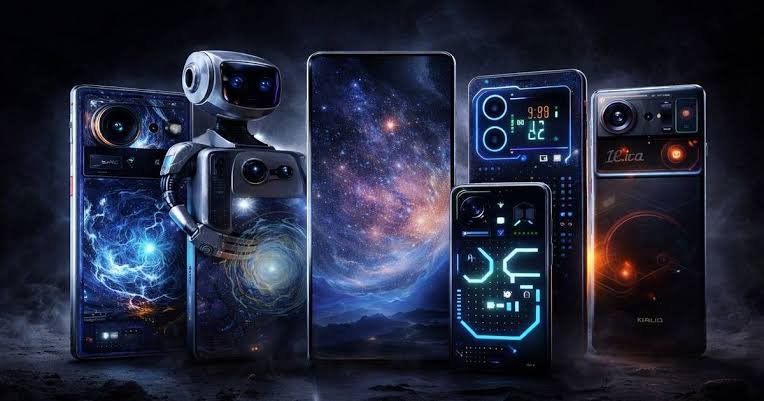
The world of Strange Smartphone Designs is filled with sliding screens, rotating cameras, gaming controls, extra displays, unusual keyboards, and folding bodies. At first, many of these designs looked strange because they were very different from ordinary phones.
Nevertheless, unusual designs have often been used to solve real problems. Better cameras were needed, larger displays were wanted, and physical controls were sometimes preferred by users. As a result, manufacturers were encouraged to experiment.
Some experiments became important parts of smartphone history. Others were forgotten after only a few years. However, even failed ideas provided useful lessons for future products.
In this article, nine interesting examples of Strange Smartphone Designs will be explored. Their unusual features, purposes, and influence on modern smartphones will also be explained in simple language.
Table of Contents
- Why Smartphone Designs Became More Experimental
- Nokia N-Gage and Gaming Phone Design
- BlackBerry Passport and the Square Screen
- Sony Xperia Play and Gaming Controls
- LG Wing and the Rotating Display
- YotaPhone and the Second Screen
- LG G Flex and the Curved Body
- Samsung Galaxy Fold and Foldable Design
- Phones With Rotating and Sliding Cameras
- Why Strange Smartphone Designs Matter
- What Future Phone Designs Could Look Like
- Frequently Asked Questions
- Conclusion
Why Smartphone Designs Became More Experimental
Smartphone design has changed dramatically over the years. Early phones were often built around physical keyboards, small screens, and simple cameras. Later, touchscreens became dominant, and physical buttons were gradually removed.
As competition increased, new ideas were introduced to make phones different. Some manufacturers focused on gaming, while others experimented with cameras, displays, batteries, or unique shapes.
This period produced many examples of Strange Smartphone Designs. Although some models were not successful commercially, they demonstrated that smartphones did not have to follow one fixed design.
Moreover, these experiments helped manufacturers understand what users actually wanted. Features that seemed unusual at first were sometimes improved and introduced again later.
1. Nokia N-Gage and Gaming Phone Design
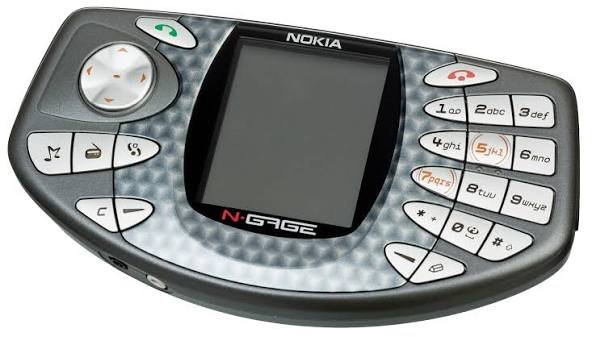
The Nokia N-Gage was introduced in the early 2000s as a combination of a mobile phone and a portable gaming device. Its shape was very different from the ordinary phones of that period.
Physical gaming controls were placed around the screen. Games could also be changed through removable game cards.
Strange Smartphone Designs The design was created because mobile gaming was expected to become an important part of the phone experience. However, the device was not as convenient for normal phone calls as traditional mobile phones.
The unusual side-mounted design became one of its most recognizable features. Although the N-Gage did not become a mainstream success, its idea was important.
Today, gaming phones are commonly equipped with advanced displays, powerful processors, cooling systems, and gaming-focused controls. Therefore, the N-Gage can be viewed as an early experiment in combining phones with dedicated gaming features.
This example shows how Strange Smartphone Designs can introduce ideas before the technology and market are ready for them.
2. BlackBerry Passport and the Square Screen
The BlackBerry Passport became famous because of its unusually wide and almost square display. At a time when many smartphones were moving toward similar rectangular shapes, a completely different form was introduced.
The physical keyboard was kept below the display. Interestingly, the keyboard also worked as a touch-sensitive surface for scrolling and other actions.
Strange Smartphone Designs The unusual shape was designed with productivity in mind. Documents, spreadsheets, emails, and other business content could be viewed differently on the wider screen.
However, the design was not suited to every type of mobile activity. Many websites and applications had already been designed around traditional rectangular displays.
Even so, the Passport demonstrated that a smartphone could be designed around a specific user group rather than being made for everyone.
Among Strange Smartphone Designs, this phone remains an interesting example of how screen shape can be changed to support a particular purpose.
3. Sony Xperia Play and Gaming Controls
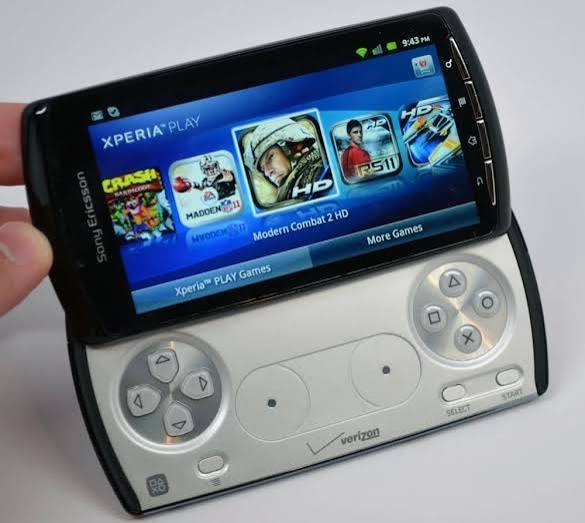
The Sony Xperia Play was another attempt to combine a smartphone with a portable gaming console.
A sliding mechanism was used to reveal physical gaming controls beneath the display. Buttons similar to those found on traditional gaming devices were provided.
Strange Smartphone Designs This approach offered a different gaming experience from touchscreen controls. Physical buttons could provide more precise input for certain games.
However, the smartphone market was changing quickly. Large touchscreen displays were becoming standard, while mobile games were increasingly being designed around touch controls.
The Xperia Play therefore became an interesting experiment rather than a long-lasting design trend.
Still, its concept remains relevant. Modern gaming phones continue to provide specialized features for players, although the design is usually much more conventional.
The Xperia Play proves that Strange Smartphone Designs can be created around a specific activity, even when the concept does not become mainstream.
4. LG Wing and the Rotating Display
The LG Wing introduced one of the most unusual smartphone mechanisms of its generation. Instead of using a foldable display, the main screen could be rotated horizontally to reveal a smaller secondary screen underneath.
This created a T-shaped arrangement.
The design was intended to support multitasking. For example, one screen could be used for navigation while another could display additional information.
The rotating mechanism also created new possibilities for cameras and video recording. Different viewing angles could be achieved while the phone was being held in unusual positions.
Although the concept was not adopted widely, it demonstrated how two-screen arrangements could be used without completely folding the main display.
Among modern Strange Smartphone Designs, the LG Wing remains one of the clearest examples of mechanical experimentation.
5. YotaPhone and the Second Screen
The YotaPhone took a completely different approach to the idea of having multiple displays. Instead of adding another traditional color screen, an electronic paper display was placed on the back.
The front screen could be used normally, while the rear display was designed for reading notifications, books, and other information.
Strange Smartphone Designs The use of electronic paper was particularly interesting because it could consume less power for certain types of content and was easier to view for long reading sessions.
The concept was unusual because users were given two different display technologies in one phone.
Although this approach did not become a mainstream standard, it showed that smartphone displays could be used in different ways.
The YotaPhone is therefore remembered as one of the more creative examples of Strange Smartphone Designs.
6. LG G Flex and the Curved Body
The LG G Flex was designed with a noticeably curved body. Instead of following the completely flat smartphone shape that had become common, the device was slightly bent.
The curved form was presented as a way to make the phone more comfortable to hold and use.
Strange Smartphone Designs At the time, curved smartphone bodies were still relatively unusual. The design also attracted attention because of its flexible OLED display and distinctive appearance.
However, the market eventually moved toward flat phones with thinner bezels and larger displays.
Even though curved bodies did not become standard, curved display technology continued to develop. Today, curved screen edges can still be found on some smartphones.
This shows how Strange Smartphone Designs can sometimes introduce technology that survives even when the original shape does not.
7. Samsung Galaxy Fold and Foldable Design
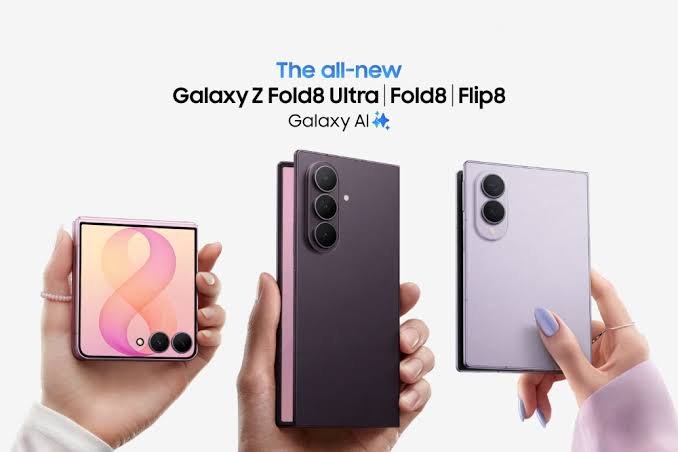
Foldable smartphones represented one of the biggest changes in mobile phone design in recent years.
Instead of keeping the display permanently flat, a flexible screen was used so that the device could be opened and closed.
The first-generation Samsung Galaxy Fold attracted significant attention because it demonstrated how a smartphone could be transformed into a larger display device.
Early foldable phones also revealed many engineering challenges. Hinge durability, screen protection, thickness, and software adaptation had to be addressed.
Over time, these problems have been worked on through newer generations of foldable devices.
The foldable concept is especially important because it changed the basic assumption that a smartphone must have one fixed screen shape.
Compared with older Strange Smartphone Designs, foldables have moved much closer to mainstream smartphone development.
8. Phones With Rotating and Sliding Cameras
Another interesting chapter in smartphone design involved moving camera systems.
Some smartphones were designed with sliding mechanisms, while others used rotating camera modules. The main purpose was usually to provide a cleaner display without placing a traditional camera cutout on the front.
With rotating camera systems, the same camera hardware could sometimes be used for both normal photography and selfies.
This idea was attractive because a single high-quality camera system could potentially serve multiple purposes.
However, moving parts also introduced mechanical complexity. Durability, dust protection, thickness, and reliability had to be considered.
Eventually, many manufacturers returned to simpler fixed camera arrangements combined with small display cutouts or under-display technology.
Nevertheless, these camera experiments remain an important part of Strange Smartphone Designs.
9. Phones That Used Modular Designs
Modular smartphones were another ambitious experiment.
The basic idea was that different components could be attached, replaced, or upgraded. Cameras, speakers, batteries, and other hardware could potentially be changed without replacing the entire phone.
This concept was attractive because smartphones normally become outdated when one major component becomes old or damaged.
Modular designs promised greater flexibility and potentially longer product life.
However, creating a modular phone that remained thin, durable, affordable, and attractive proved difficult.
The idea therefore remained limited compared with traditional smartphone designs.
Even so, modular experiments encouraged discussion about repairability, upgrades, sustainability, and product longevity.
They also demonstrated that Strange Smartphone Designs are not always created simply for appearance. Sometimes they are developed to challenge the way electronic products are owned and maintained.
Why Strange Smartphone Designs Matter
Unusual phone designs can teach manufacturers important lessons.
First, they reveal how people respond to new forms of interaction. A feature may look impressive but still be inconvenient during everyday use.
Second, unusual products can help identify useful technologies. Flexible displays, advanced hinges, and improved camera systems have all benefited from years of experimentation.
Third, failed designs can still influence future products. A mechanism that did not work well in one generation may be improved later.
Therefore, Strange Smartphone Designs should not always be judged only by their commercial success.
Some designs were created too early. Others were made for a very specific audience. A few introduced technologies that later became more practical.
What Future Phone Designs Could Look Like
Future smartphones may become even more flexible.
Foldable displays could become thinner and more durable. Rollable screens may eventually allow a compact phone to expand into a larger display.
Cameras could also become more integrated into the screen. Mechanical camera systems may continue to be replaced by smaller and more advanced technologies.
Another possibility is that smartphones could become less dependent on traditional rectangular bodies.
New materials may allow screens to be wrapped, folded, stretched, or placed on different parts of a device.
However, future designs will still need to solve practical problems. Battery life, durability, repairability, weight, and cost will remain important.
The next generation of Strange Smartphone Designs will therefore likely be shaped by a balance between creativity and everyday usefulness.
Frequently Asked Questions
Why were unusual smartphone designs created?
Unusual designs were usually created to solve specific problems, introduce new features, or make a phone different from competing products.
Which smartphone had a rotating display?
The LG Wing used a rotating main display that revealed a smaller screen underneath.
Why did some smartphones have sliding cameras?
Sliding cameras were mainly used to provide a larger uninterrupted display while keeping the front camera hidden when it was not needed.
Were modular smartphones successful?
Modular smartphone concepts received attention but did not become the dominant smartphone design. Practical issues such as thickness, durability, and compatibility created challenges.
Are foldable phones still being developed?
Yes. Foldable smartphones have continued to be developed, with improvements being made to displays, hinges, software, and overall durability.
Why did some strange phone designs disappear?
Some designs were difficult to use, expensive to manufacture, mechanically complicated, or simply did not match what most users wanted.
Can old smartphone designs influence future phones?
Yes. Ideas that were unsuccessful in the past can be improved when technology becomes more advanced. This is one reason Strange Smartphone Designs remain important in the history of mobile technology.
Conclusion
The history of smartphones has never been completely predictable. Many manufacturers have experimented with unusual shapes, moving parts, multiple screens, physical controls, and flexible displays.
Some experiments disappeared quickly, while others helped introduce technologies that later became more practical.
The Nokia N-Gage, BlackBerry Passport, Xperia Play, LG Wing, YotaPhone, LG G Flex, Galaxy Fold, rotating-camera phones, and modular devices all demonstrate different approaches to smartphone design.
The story of Strange Smartphone Designs shows that innovation does not always begin with a perfect product. Sometimes an unusual idea must be tested first.
As smartphone technology continues to develop, even today’s strange concepts could influence tomorrow’s mainstream devices. The next major change may come from an idea that currently looks unusual, impractical, or completely different from the phones we use today.