
Mobile applications are becoming more visual, intelligent, and interactive. As smartphones become more powerful, traditional flat interfaces are being replaced with richer digital experiences. Among these changes, 3D Mobile App Designs are gaining attention because they can make apps feel more realistic and engaging.
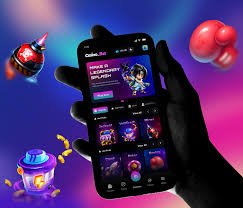
In traditional apps, most buttons, menus, cards, and icons are displayed in two-dimensional layouts. However, depth, movement, lighting, and three-dimensional objects can be added to create a more immersive experience. As a result, users can be given a stronger visual connection with the content.
Furthermore, 3D design can be combined with artificial intelligence, augmented reality, animation, and advanced touch controls. Therefore, future mobile applications could become much more interactive than the apps commonly used today.
This article explores seven interesting 3D Mobile App Designs that could influence the future of mobile interfaces.
Table of Contents
- What Are 3D Mobile App Designs?
- 3D Product Exploration Apps
- Interactive 3D Navigation
- 3D Social Media Interfaces
- Immersive Learning Applications
- 3D Shopping Experiences
- Interactive Fitness Apps
- 3D Creative and Design Applications
- Benefits of 3D Mobile App Designs
- Challenges of Using 3D Interfaces
- Future of 3D Mobile App Designs
- Frequently Asked Questions
- Conclusion
What Are 3D Mobile App Designs?
3D Mobile App Designs are interfaces in which depth, perspective, lighting, shadows, and three-dimensional objects are used to improve the user experience. Instead of showing everything as a flat element, objects can be presented with a stronger sense of space.
For example, a furniture application could display a 3D chair that can be rotated with a finger. Similarly, a learning application could show a three-dimensional human heart that can be explored from different angles.
The goal is not simply to make an application look attractive. Instead, 3D elements can be used to make information easier to understand and actions more engaging.
Moreover, interactive movement can be added to many 3D elements. Therefore, users can feel as though they are interacting with objects rather than simply viewing screens.
1. 3D Product Exploration Apps
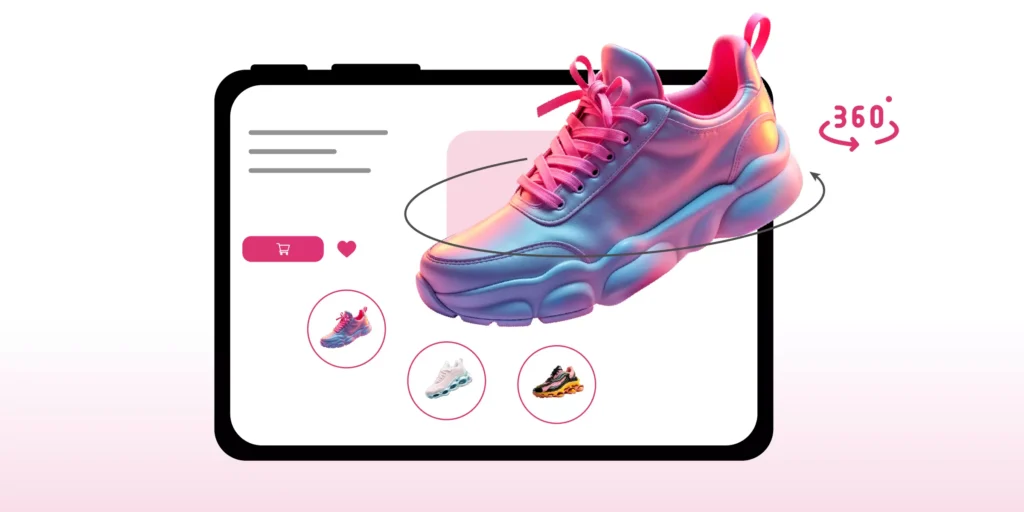
One of the most useful applications of 3D Mobile App Designs could be seen in product exploration.
Online shoppers often depend on photographs before purchasing products. However, a single photograph cannot always show every important detail. With a 3D interface, a product can be viewed from multiple directions.
For example, a smartphone could be rotated with a simple finger movement. Its back, sides, ports, camera system, and buttons could then be inspected without needing multiple images.
Furniture could also be explored in a similar way. A sofa, table, or chair could be rotated and examined from different angles.
In the future, additional information could be displayed when a specific part of the product is selected. As a result, the shopping experience could become more informative and interactive.
2. Interactive 3D Navigation
Navigation could also be redesigned through 3D Mobile App Designs.
Most mobile navigation systems currently depend on flat maps and simple menus. However, three-dimensional environments could make digital navigation easier to understand in certain situations.
For example, a shopping mall application could create a virtual 3D version of the building. Stores, restaurants, elevators, and entrances could then be displayed as interactive objects.
Users could zoom into different floors and select specific locations. Directions could then be shown through animated paths.
Similarly, airports, universities, hospitals, and large public buildings could benefit from this approach.
Because spatial information would be represented visually, complex locations could potentially be understood more quickly.
3. 3D Social Media Interfaces
Social media could become another interesting area for 3D Mobile App Designs.
Instead of displaying every post as a flat card, future platforms could use interactive spaces. Photos, videos, profiles, and digital objects could be placed inside a three-dimensional environment.
For instance, a creator could design a virtual room where different posts are displayed on digital walls. Users could move between sections and explore content in a more visual way.
Three-dimensional profile spaces could also be created. A user’s interests, artwork, videos, or favorite content could be represented through interactive objects.
However, such designs would need to remain simple. If too many animations and objects were added, users could become distracted.
Therefore, balance would be especially important when 3D interfaces are used for social applications.
4. Immersive Learning Applications
Education could be transformed through interactive 3D Mobile App Designs.
Many subjects are difficult to understand through ordinary images and text. Three-dimensional models could provide a more direct visual explanation.
For example, students studying biology could explore a 3D model of a cell. Different parts could be selected to display additional information.
In geography, mountains, oceans, cities, and historical locations could be represented through interactive environments.
Science experiments could also be simulated inside an application. Users could interact with virtual objects and observe how different actions produce different results.
As a result, complex subjects could become more visually understandable.
Moreover, students could explore models at their own speed. This could make learning more flexible and engaging.
5. 3D Shopping Experiences
E-commerce applications could be redesigned significantly through 3D Mobile App Designs.
Clothing, furniture, electronics, decorations, and other products could be displayed as interactive models. Users could rotate objects, zoom into details, and examine products from different perspectives.
Virtual try-on systems could also become more advanced. Instead of simply placing a flat image over a camera view, future systems could create more realistic three-dimensional representations.
For home decoration, users could place virtual furniture inside their rooms. Different products could then be compared before a purchase is made.
This approach could reduce uncertainty because more visual information would be provided.
Furthermore, product customization could be integrated into the same interface. Users could change colors, materials, sizes, or designs and immediately view the results.
6. Interactive Fitness Apps
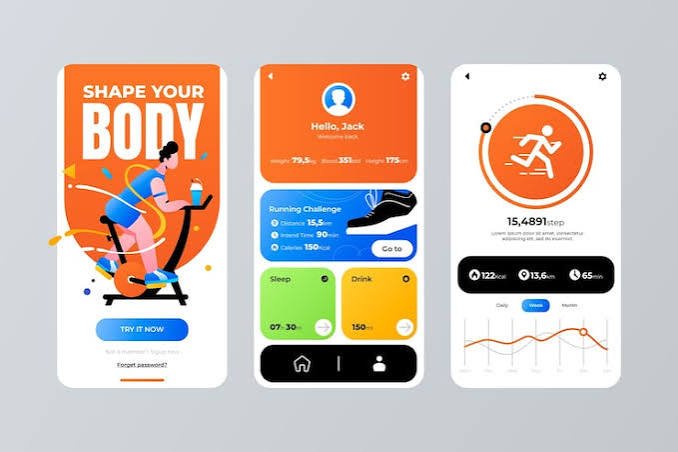
Fitness applications could also benefit from 3D Mobile App Designs.
Traditional fitness apps usually provide videos, photographs, or written instructions. However, a three-dimensional trainer could demonstrate exercises from multiple angles.
For example, users could rotate a virtual fitness model to understand body positioning. Important movement areas could be highlighted during an exercise.
AI could also be combined with the interface. A future application could analyze movement through a smartphone camera and provide visual guidance.
Instead of simply saying that a movement needs correction, the application could show how the body position should be changed.
Therefore, 3D interfaces could potentially make fitness instructions easier to follow.
7. 3D Creative and Design Applications
Creative applications may become one of the most exciting areas for 3D Mobile App Designs.
Currently, many mobile design tools are focused on photographs, illustrations, and flat graphics. More powerful smartphones could allow advanced 3D creation to be performed directly on mobile devices.
Users could create objects, characters, rooms, products, and environments using touch controls.
Objects could be rotated, resized, reshaped, and positioned inside a virtual workspace. Lighting and textures could also be adjusted.
For beginners, simplified controls could be provided. Meanwhile, professional designers could be given more advanced tools.
This could make mobile devices more useful for creative work.
Benefits of 3D Mobile App Designs
Several benefits could be provided when 3D Mobile App Designs are used correctly.
First, information can be presented more visually. Users can interact with objects instead of depending entirely on text.
Second, product details can be explored from multiple angles. This can be particularly useful for shopping and product demonstrations.
Third, complex concepts can be represented through interactive models. This could be valuable in education, healthcare training, engineering, and architecture.
Fourth, applications can become more memorable. Carefully designed movement and depth can create a stronger visual experience.
Finally, 3D interfaces can support new forms of interaction. Touch, gestures, cameras, augmented reality, and voice controls can potentially be combined.
However, these benefits depend heavily on good design. A 3D interface should solve a problem rather than simply add visual effects.
Challenges of Using 3D Interfaces
Despite their potential, 3D Mobile App Designs also come with challenges.
Performance is one major concern. Three-dimensional graphics can require more processing power than simple interfaces. Older smartphones may therefore experience slower performance.
Battery usage can also increase when advanced graphics and animations are constantly being processed.
Another issue is usability. Not every user wants a complicated interface. If navigation becomes confusing, a visually impressive design may actually make an application harder to use.
Accessibility should also be considered. Motion-heavy interfaces may not be comfortable for every user.
Therefore, designers will need to focus on simplicity, performance, accessibility, and purpose.
Future of 3D Mobile App Designs
The future of 3D Mobile App Designs could become even more interesting as mobile hardware and software continue to improve.
Artificial intelligence could be used to generate 3D objects automatically. Users may simply describe an object and have a usable model created inside an application.
Augmented reality could also connect digital 3D objects with the physical world. As a result, applications may no longer be limited to traditional rectangular screens.
Foldable devices and spatial computing could provide additional opportunities. Interfaces could potentially expand across different surfaces and environments.
At the same time, designers may focus on adaptive interfaces. The layout could change according to the user’s task, environment, or preferences.
Consequently, mobile applications could become more responsive and personalized.
Frequently Asked Questions
What are 3D Mobile App Designs?
3D Mobile App Designs use depth, perspective, lighting, animation, and three-dimensional objects to create more interactive mobile interfaces.
Are 3D interfaces better than traditional mobile designs?
Not always. A 3D interface can be useful when depth and interaction improve understanding. However, simpler 2D designs can still be more practical for many applications.
Can 3D design be used in shopping apps?
Yes. Products can be displayed as interactive models so users can rotate, zoom, and inspect them from different angles.
Can AI improve 3D mobile applications?
Yes. AI can potentially help generate 3D objects, personalize interfaces, analyze user behavior, and create adaptive experiences.
Will 3D apps work on older smartphones?
Some basic 3D features can work on older devices, but advanced graphics may require stronger hardware. Performance optimization will therefore remain important.
Where can 3D mobile interfaces be useful?
They can be useful in shopping, education, fitness, navigation, social media, product visualization, entertainment, and creative applications.
Conclusion
3D Mobile App Designs could introduce a new level of interaction to mobile applications. Instead of relying only on flat buttons, cards, and images, future interfaces could use depth, movement, virtual objects, and spatial interaction.
From product exploration and shopping to education, navigation, fitness, and creative work, many different applications could benefit from three-dimensional interfaces.
However, successful design will not depend only on impressive graphics. Performance, simplicity, accessibility, and practical usefulness will remain important.
As AI, augmented reality, and mobile hardware continue to develop, 3D Mobile App Designs could become an increasingly important part of future digital experiences.
Pingback: 9 Strange Smartphone Designs That Changed the Industry