
Brands are no longer limited to simple circles, letters, and traditional icons. As technology changes, visual identities are also being redesigned. New symbols are being created with unusual shapes, digital patterns, geometric forms, and futuristic ideas.
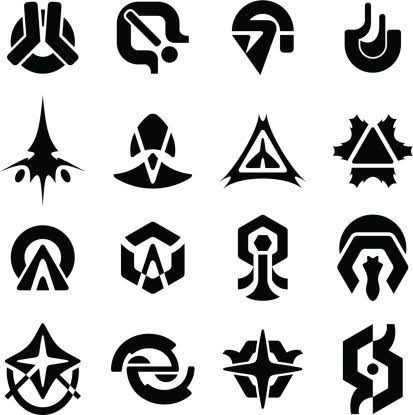
The world of Futuristic Symbol Designs is especially interesting because symbols can communicate an idea without using a complete word. A carefully designed mark can represent technology, movement, intelligence, sustainability, or even an imaginary future.
In the coming years, brand symbols could become more interactive and adaptable. They may change their appearance depending on the device, environment, or user. As a result, designers are experimenting with shapes that look very different from traditional logos.
Here are seven strange and interesting directions that could influence the logos of tomorrow.
Table of Contents
- Abstract Geometric Symbols
- AI-Inspired Symbol Designs
- Holographic Brand Symbols
- Dynamic and Moving Symbols
- Minimal Digital Symbols
- 3D Futuristic Emblems
- Nature and Technology Symbols
- The Future of Symbol Design
- Frequently Asked Questions
- Conclusion
1. Abstract Geometric Symbols
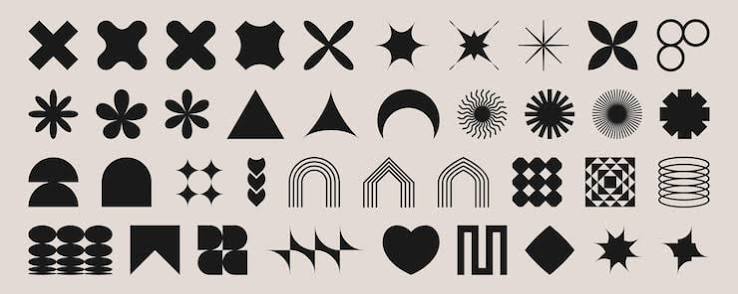
Geometry has always played an important role in logo design. However, futuristic branding could take geometric shapes much further.
Instead of using ordinary circles, squares, or triangles, designers can combine multiple forms to create unusual visual marks. Several lines can be connected to produce a symbol that looks almost like a digital object.
These Futuristic Symbol Designs can be created using symmetry, repetition, negative space, and unusual proportions. The final result may appear simple at first, but additional details can become visible when the symbol is examined closely.
For example, a brand could use three interconnected shapes to represent communication, technology, and human connection. Another company could use a broken geometric circle to represent continuous innovation.
The advantage of geometric symbols is their flexibility. They can be placed on websites, packaging, mobile applications, products, signs, and advertisements.
Therefore, abstract geometry could become an important part of future visual identities.
2. AI-Inspired Symbol Designs
Artificial intelligence is influencing many areas of design, and branding is no exception.
Futuristic Symbol Designs Future symbols could be inspired by neural networks, connected nodes, digital brains, algorithms, and machine learning patterns. Instead of representing AI with a basic robot icon, designers could create more abstract visual identities.
A symbol could contain several small points connected by thin lines. Another could use flowing patterns that resemble a digital neural network.
These Futuristic Symbol Designs could be especially useful for technology companies, research organizations, software platforms, and innovative startups.
However, simplicity would still be important. If too many details were included, the symbol could become difficult to recognize.
For this reason, designers may combine complex AI concepts with simple visual structures. A complicated idea could then be represented through a clean and memorable mark.
This approach could make AI-related branding look more sophisticated rather than predictable.
3. Holographic Brand Symbols
Holographic visuals are often associated with science-fiction movies, but similar visual ideas can already be explored through modern digital design.
A future brand symbol might appear differently depending on its viewing angle. Light effects, transparent layers, reflections, and depth could be used to create a holographic appearance.
Imagine a logo appearing as a simple symbol on a business card but transforming into a glowing three-dimensional mark when viewed through a digital device.
That concept could make branding more interactive.
Holographic Futuristic Symbol Designs could also be used in entertainment, gaming, transportation, virtual environments, and technology products.
Nevertheless, a strong basic shape would still be necessary. A symbol should remain recognizable even when special effects are removed.
This means the best holographic identities could combine a simple foundation with advanced visual effects.
4. Dynamic and Moving Symbols
Traditional logos usually remain unchanged. A company selects one symbol, and that symbol is used consistently across different platforms.
Digital technology makes something different possible.
Futuristic Symbol Designs A future symbol could move, rotate, expand, or transform depending on where it is displayed. For example, a logo could gently animate on a website but remain static on printed material.
On a smartwatch, the same symbol could become smaller and simpler. On a large digital screen, it could expand into a detailed animation.
This creates a flexible identity rather than a single fixed image.
Dynamic Futuristic Symbol Designs could therefore be created as systems instead of individual logos. The basic shape would remain recognizable while its appearance could change.
For example, a technology brand might use a circular symbol. When the brand is loading, the circle could rotate. When a service is active, sections of the circle could illuminate.
As a result, the logo itself could become part of the user experience.
5. Minimal Digital Symbols
Interestingly, futuristic design does not always have to be complicated.
Some of the most effective future symbols could be extremely simple. A few lines, a small shape, or a carefully designed letter could become a recognizable digital identity.
This approach is particularly useful because modern symbols need to work across many screen sizes.
A detailed logo may look impressive on a large display but become unclear when reduced to a tiny application icon. A simple symbol, however, can remain recognizable at different sizes.
Designers may therefore create symbols using only a few visual elements.
Futuristic Symbol Designs Negative space could also play an important role. A hidden shape might become visible between two lines or inside an empty area.
This type of design can create an interesting visual discovery without making the symbol unnecessarily complicated.
For that reason, minimalism could remain important even as branding becomes more futuristic.
6. 3D Futuristic Emblems
Three-dimensional design can give symbols a physical appearance.
Futuristic Symbol Designs Instead of displaying a flat logo, designers can create an emblem that looks like it has depth, metallic surfaces, glass layers, or futuristic materials.
For example, a technology company could use a symbol that resembles a floating metal ring. A gaming brand could use a deep 3D emblem with sharp edges. A futuristic transportation company could use a smooth aerodynamic mark.
These Futuristic Symbol Designs could work particularly well in digital environments.
They could be used in video games, virtual reality experiences, product interfaces, advertisements, and futuristic websites.
However, designers would need to create a simplified version as well. A highly detailed 3D emblem may not work effectively when printed in a small size.
Therefore, future identity systems could include both a detailed 3D version and a simple flat version of the same symbol.
7. Nature and Technology Symbols
Another interesting direction combines natural forms with futuristic technology.
Instead of separating nature and digital design, designers can merge them into one symbol.
Futuristic Symbol Designs A leaf could be constructed from circuit-like lines. A flower could be transformed into a geometric digital pattern. A wave could be represented through glowing curves. Even a tree could be redesigned using interconnected nodes.
These combinations can communicate ideas such as clean energy, sustainability, innovation, and environmental technology.
They can also make futuristic branding feel more human.
For example, a renewable energy company could use a symbol combining a sun and a digital circuit. A smart agriculture company could use a leaf made from connected geometric shapes.
This type of visual language could become increasingly useful as technology and environmental design continue to overlap.
The Future of Symbol Design
The future of branding could be more flexible than the traditional logo system.
Futuristic Symbol Designs Instead of designing one permanent image, designers may create complete visual systems. The symbol could have different versions for websites, applications, advertisements, physical products, and immersive environments.
Artificial intelligence could also assist designers in generating new shapes and exploring unusual combinations. However, human creativity would still be important because a good symbol needs meaning, balance, and recognition.
The strongest Futuristic Symbol Designs may therefore combine technology with basic design principles.
Simple shapes can remain powerful. Good spacing can improve recognition. Strong proportions can make a symbol memorable. Meanwhile, animation and 3D effects can add additional layers when needed.
In this way, futuristic design does not necessarily mean adding more visual elements. Instead, it can mean creating a smarter and more adaptable identity.
Why Symbols Could Become More Important
Symbols are useful because they can communicate quickly.
Futuristic Symbol Designs A person may not have time to read a company’s full name while looking at a product, application, vehicle, or digital screen. A recognizable symbol can provide instant visual identification.
This is particularly important as more devices become smaller and more interactive.
Smartwatches, wearable devices, digital glasses, vehicle displays, and other connected products may require compact visual identities.
As a result, Futuristic Symbol Designs could become increasingly important for companies that want their brands to work across physical and digital environments.
The symbol may also become part of an interactive experience rather than simply appearing as a decorative logo.
Frequently Asked Questions
What are Futuristic Symbol Designs?
Futuristic Symbol Designs are visual marks created with modern or experimental concepts. They may use geometric shapes, digital patterns, 3D forms, AI-inspired structures, animation, or unusual combinations.
How are futuristic symbols different from normal logos?
Traditional logos are often designed as fixed visual marks. Futuristic symbols may be more adaptable and can include animation, multiple versions, 3D elements, or interactive features.
Can a simple symbol look futuristic?
Yes. Futuristic design does not require complicated graphics. Simple geometry, negative space, unusual proportions, and clean lines can create a modern futuristic appearance.
Where can futuristic symbols be used?
They can be used for technology companies, applications, gaming brands, transportation, entertainment, renewable energy, digital products, websites, packaging, and many other industries.
Will AI change logo and symbol design?
AI can help designers explore large numbers of visual ideas quickly. However, final branding decisions still require consideration of meaning, usability, originality, and brand identity.
Conclusion
The future of branding could move far beyond ordinary logos. Abstract geometry, AI-inspired patterns, holographic effects, animation, minimal forms, 3D emblems, and nature-inspired technology could all influence the next generation of visual identities.
The most interesting Futuristic Symbol Designs may not simply look futuristic. They could also be flexible enough to work across websites, applications, physical products, wearable devices, and immersive digital environments.
As technology continues to develop, symbols may become more interactive, adaptable, and expressive. A simple mark could eventually become an entire visual language for a brand.
That possibility makes futuristic symbol design an exciting area for designers, businesses, and creative industries.
Pingback: Button Designs: 7 Strange Ideas That Could Change the Future