
Laptops have changed dramatically over the past few decades. Earlier computers were often heavy, thick, and difficult to carry. Today, they are thinner, lighter, and more powerful. However, the next generation of computers could look very different from the laptops that are used today.

New display technologies, flexible screens, advanced hinges, modular components, and unusual layouts are being explored by technology companies. As a result, Futuristic Laptop Designs are becoming an interesting part of modern product design.
These concepts are not only about making a laptop look attractive. Instead, they are being developed to improve portability, multitasking, creativity, entertainment, and productivity. Some designs could also change the way users interact with computers.
Table of Contents
- Foldable Display Laptops
- Dual-Screen Laptop Designs
- Rollable Screen Laptops
- Modular Laptop Designs
- Detachable and Flexible Laptops
- Advanced Hinge Designs
- Transparent Display Concepts
- Benefits of Future Laptop Design
- Frequently Asked Questions
- Conclusion
1. Foldable Display Laptops
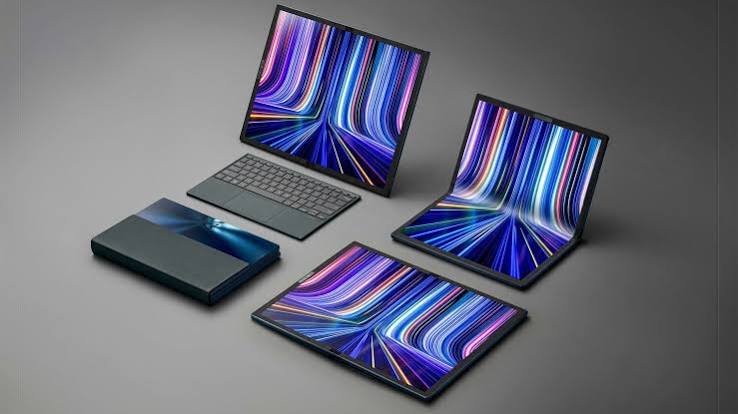
Foldable displays have already introduced a different approach to mobile technology. The same idea can also be applied to laptops. A large screen could be folded into a smaller body when the device needs to be transported.
With Futuristic Laptop Designs, foldable screens could provide a larger working area without requiring a permanently large device. When opened, the display could offer more space for documents, creative applications, videos, and other tasks.
The keyboard area could also be redesigned around the flexible screen. In some concepts, a physical keyboard may remain available. In others, part of the display could become a virtual keyboard.
This type of design could be especially useful for people who frequently travel. A larger workspace could be carried without the size of a traditional large laptop.
2. Dual-Screen Laptop Designs
Another interesting direction is the use of two displays. Instead of having one screen and a traditional keyboard, a laptop could use two connected displays.
This concept could provide more flexibility. For example, one screen could be used for writing while the second screen could display research material. Similarly, a video could be watched on one side while notes are created on the other.
Modern Futuristic Laptop Designs could make dual-screen systems more practical through improved hinges and software.
The second display does not always have to replace the keyboard. It could also be positioned above the keyboard or used as an additional workspace.
For designers and programmers, this extra screen area could be particularly useful. Multiple applications could remain visible at the same time, reducing the need to constantly switch between windows.
3. Rollable Screen Laptops
Rollable displays represent another unusual possibility. Instead of folding, the screen could expand or retract inside the laptop body.
When portability is needed, the display could remain compact. When more workspace is required, the screen could be expanded.
This idea is still developing, but it demonstrates how Futuristic Laptop Designs could move beyond fixed screen sizes.
A rollable display could potentially provide a larger screen without making the entire laptop significantly wider. However, durability would be an important consideration.
Futuristic Laptop Designs The mechanism would need to be carefully protected from dust, pressure, and repeated movement. Therefore, engineering and material development would play an important role in making this concept practical.
4. Modular Laptop Designs
Traditional laptops can be difficult to upgrade because many components are permanently attached to the motherboard. Future designs could take a different approach.
A modular laptop could allow selected parts to be replaced or upgraded more easily. Storage, memory, batteries, ports, or other components could potentially be designed as separate modules.
This approach could make Futuristic Laptop Designs more adaptable. Instead of replacing the entire computer when one component becomes outdated, users could upgrade specific parts.
Modular designs could also be useful for different types of users. A student might require a simple configuration, while a professional could add additional storage or specialized hardware.
Furthermore, modular construction could potentially reduce electronic waste. If individual components can be replaced, the complete device may not need to be discarded as quickly.
5. Detachable and Flexible Laptops
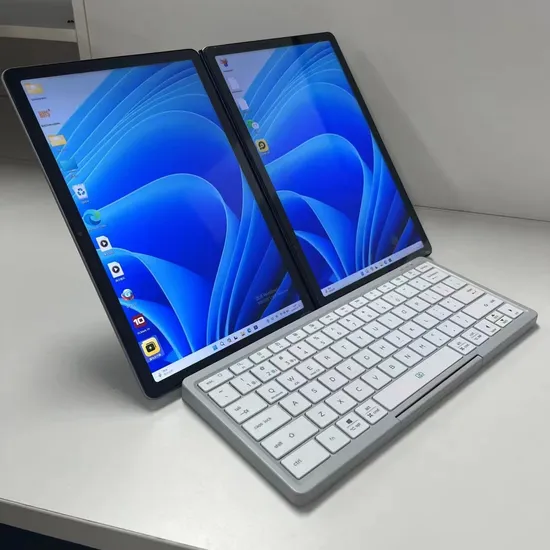
The traditional laptop combines a display and keyboard in one device. Future designs could separate these components when necessary.
A detachable screen could function as a tablet while the keyboard section could remain at home or in an office. When a full computer experience is needed, the two parts could be connected again.
Some Futuristic Laptop Designs may also use flexible materials to create devices that can change their shape.
This flexibility could make one device useful for several situations. A user could work with a keyboard, watch content in tablet mode, or carry only the display during short trips.
However, connectivity and battery management would need to be carefully designed. A detachable computer would need reliable communication between its different components.
6. Advanced Hinge Designs
The hinge is one of the most important parts of a laptop, but it is often overlooked. Future laptop designs could make the hinge much more versatile.
Instead of simply opening and closing at one angle, an advanced hinge could allow several positions. The screen could be rotated, tilted, folded, or positioned in different modes.
This could make Futuristic Laptop Designs more useful in creative and professional environments.
For example, a laptop could be placed in tent mode for presentations. It could also be positioned almost flat for drawing or collaborative work.
Better hinge engineering could also support larger displays. As screens become more flexible, hinges will need to manage movement without putting excessive stress on the display.
7. Transparent Display Concepts
Transparent displays could create one of the most unusual laptop appearances. In this concept, parts of the screen could allow light to pass through while digital information is displayed.
Although transparent computing is still an emerging area, it shows how Futuristic Laptop Designs could change the visual appearance of computers.
Futuristic Laptop Designs A transparent display could potentially be useful for creative presentations, specialized work environments, or augmented information.
However, practical challenges would need to be solved. Brightness, privacy, viewing angles, battery consumption, and manufacturing costs could all affect the usefulness of this technology.
Therefore, transparent laptops may initially appear as specialized products rather than mainstream computers.
Benefits of Future Laptop Design
The main purpose of Futuristic Laptop Designs is not simply to create unusual-looking computers. Better designs could solve several practical problems.
First, improved displays could provide more workspace without requiring larger devices. Second, flexible structures could make laptops easier to carry. Third, modular components could make repairs and upgrades more convenient.
In addition, unusual designs could support different working styles. Artists may benefit from flexible screens, while professionals could use multiple displays for multitasking.
Portability could also improve. A computer that changes its physical shape could provide a large workspace when needed and a compact form when it is being transported.
Another potential benefit is better sustainability. If laptops are designed to be repaired and upgraded, their useful life could potentially be extended.
How These Designs Could Change Everyday Computing
The biggest change may not be the appearance of the laptop. Instead, it could be the way people interact with their computers.
Current laptops generally follow a familiar structure: a screen, keyboard, trackpad, and hinge. Future concepts could remove some of these limitations.
For example, Futuristic Laptop Designs could allow a computer to transform depending on the task. A single device could become a large workstation, tablet, presentation screen, or compact travel computer.
Software would also need to evolve alongside hardware. Interfaces would have to automatically adjust when screens fold, expand, rotate, or separate.
As a result, hardware and software design would become even more closely connected.
Challenges Behind Futuristic Laptop Designs
Despite their potential, new laptop concepts face several challenges. Flexible displays can be more complicated to manufacture than conventional screens. Moving components can also create additional points where damage may occur.
Battery technology is another major issue. Larger displays and additional components can require more power.
Cost could also slow adoption. New materials and complex manufacturing processes are usually expensive during their early stages.
Therefore, Futuristic Laptop Designs will need to become reliable, affordable, and practical before they can become common among everyday users.
Frequently Asked Questions
What are Futuristic Laptop Designs?
Futuristic Laptop Designs are computer concepts that use new shapes, displays, hinges, materials, or modular components to create different ways of using a laptop.
Will foldable laptops replace normal laptops?
Foldable laptops could become more common, but there is no guarantee that they will completely replace conventional laptops. Both designs may continue to serve different users.
What is a dual-screen laptop?
A dual-screen laptop uses two displays instead of relying on one traditional screen. The additional display can be used for multitasking, creativity, communication, or entertainment.
Are rollable laptop screens available?
Rollable display technology is still developing. Some concepts and prototypes have demonstrated the idea, but widespread everyday adoption depends on durability, cost, and manufacturing improvements.
Can modular laptops reduce electronic waste?
Potentially, yes. If important components can be replaced or upgraded, users may be able to keep a laptop for longer instead of replacing the entire device.
Conclusion
The future of laptop design could be very different from the familiar computers used today. Foldable screens, dual displays, rollable panels, modular components, flexible bodies, advanced hinges, and transparent displays are opening new possibilities.
The most interesting part of Futuristic Laptop Designs is their ability to combine portability with larger and more flexible workspaces. Instead of creating one fixed shape for every user, future computers could be designed to adapt to different situations.
However, successful designs will need more than an unusual appearance. Durability, battery life, software support, repairability, and affordability will also matter.
As technology continues to develop, Futuristic Laptop Designs could gradually move from experimental concepts toward practical products. The laptop of the future may not simply become thinner or faster. It could become a completely different type of computer.
Pingback: 7 Strange Futuristic Symbol Designs That Could Amazing